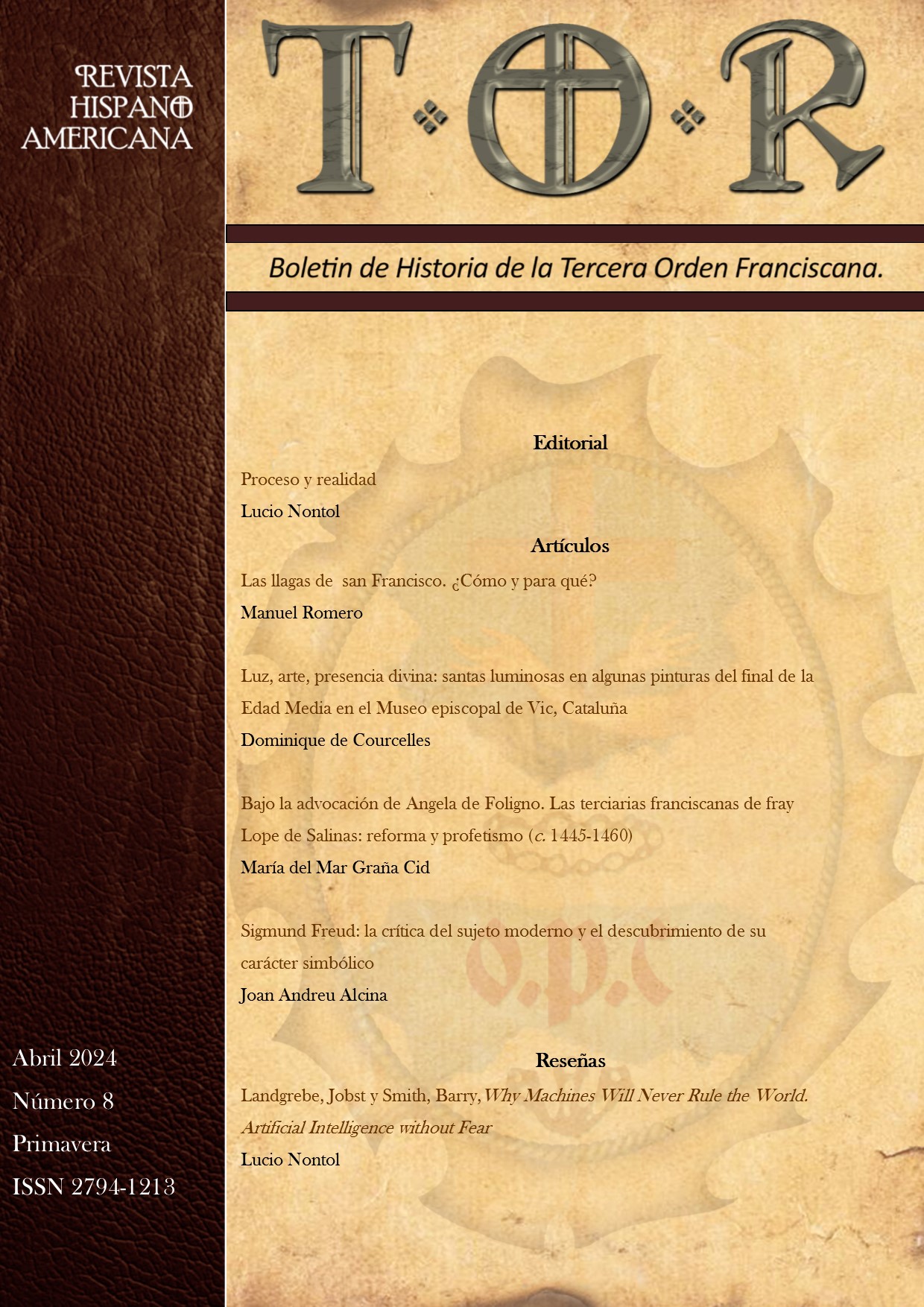
Sigmund Freud
The Critique of the Modern Subject and the Discovery of Its Symbolic Character
Keywords:
Subjetividad, Modernidad, Freud y el Yo, Richard Rorty y el Yo, Subjectivity, Modernity, Freud and the Self, Richard Rorty and the SelfAbstract
In these pages, it is confirmed that the understanding of subjectivity as an instance coextensive with consciousness resulting from the philosophical paradigm of Modernity has been radically questioned based on Freudian subjective instances. Drawing from psychology, Freud reformulated the modern notion of the self by considering it as the emergent manifestation of a fundamental unconscious agency. In this sense, the conscious dimension of the self is nothing more than the tip of the iceberg of a complex network of instincts and drives submerged in the unconscious darkness of the subject. Freud’s reflections have come to be considered essential in the contemporary intellectual situation. This is reflected in the influences that his approaches have had on 20th-century philosophy, especially on thinkers such as Michel Foucault or Richard Rorty. Freud’s conception of the self as a precarious entity for understanding the deep structure of personality has left an indelible mark on contemporary philosophical and psychological thought.
Downloads
Published
How to Cite
Issue
Section
License
Copyright (c) 2024 Hispano American Journal T.O.R.

This work is licensed under a Creative Commons Attribution-NonCommercial-NoDerivatives 4.0 International License.